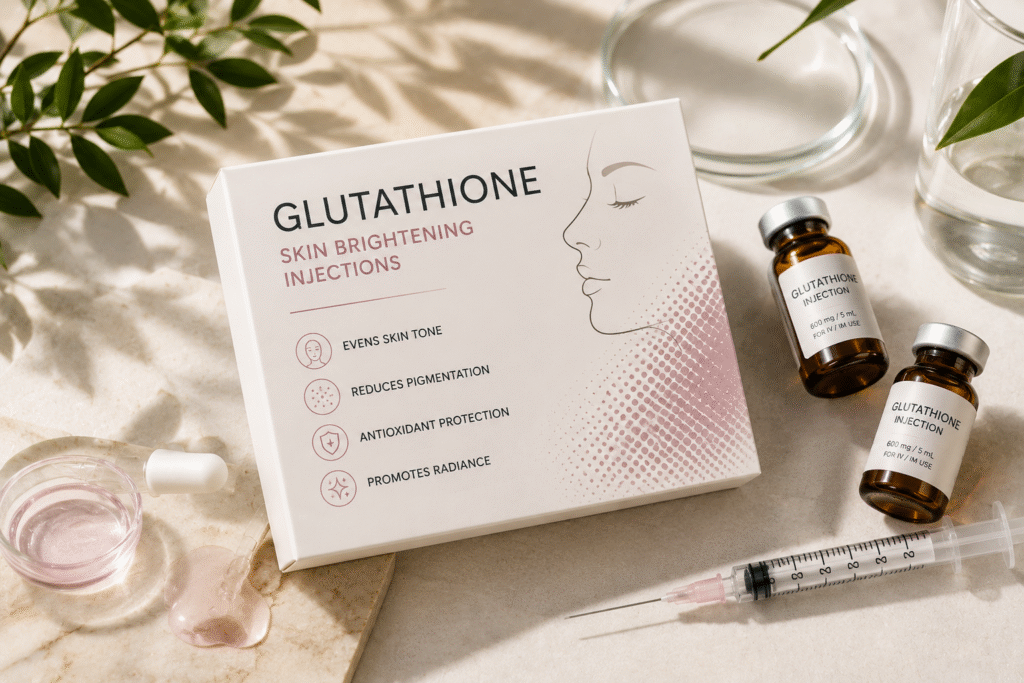
The demand for an even tone, radiance, and a healthy look to the skin is steadily growing, and one of the most talked-about directions in this niche is glutathione injections . Skin whitening injections based on glutathione and vitamin C promise a more even complexion, reduced pigmentation, and an overall feeling of skin "glow." Let's break down how glutathione works for the skin , what to realistically expect from a course, and what's important for the practitioner to keep in mind when choosing a product.
What glutathione injections are
Glutathione is a tripeptide made up of three amino acids: glycine, cysteine, and glutamic acid. It's called the body's "master antioxidant," since it participates in neutralizing free radicals, in detoxification, and in protecting cells from oxidative stress. Glutathione is produced in the body on its own, but its level decreases with age and under the influence of external factors.
In aesthetic medicine, glutathione injections are used as a tool for skin whitening and evening out the skin tone. Whitening injections are administered to deliver the active substance directly, bypassing the gastrointestinal tract, where a significant portion of oral glutathione is broken down. That's precisely why the injectable form is considered more bioavailable compared to tablets.
How glutathione affects skin tone
The main mechanism by which glutathione is linked to skin brightening is its effect on the synthesis of melanin. Melanin is the pigment that determines the shade of the skin and is responsible for the appearance of dark spots, uneven tone, and hyperpigmentation.
Glutathione acts on the enzyme tyrosinase – the key link in the production of melanin. By reducing the activity of tyrosinase and neutralizing the free radicals that stimulate it, glutathione contributes to a shift toward a lighter pigment and a more even tone. At the same time, as a powerful antioxidant, it supports the protection of cells, which is reflected in the overall quality and radiance of the skin.
It's important to understand, this isn't about radical "bleaching" but about a gradual evening of the tone, a reduction in dullness, and the maintenance of a healthy look to the skin.
Glutathione and vitamin C: why they're combined
The classic combination in whitening protocols is glutathione and vitamin C (ascorbic acid). This pairing appears in the majority of professional formulas for a reason.
Vitamin C enhances the action of glutathione in several directions at once. First, it's a strong antioxidant in its own right and participates in brightening the tone by suppressing the excessive production of melanin. Second, vitamin C helps restore oxidized glutathione, prolonging its antioxidant action. Third, ascorbic acid plays a key role in the synthesis of collagen, which has a positive effect on the firmness and texture of the skin.
What to expect from a course: indications and results
Glutathione injections are chosen for a range of aesthetic tasks. These include a dull, tired complexion, an uneven skin tone, a tendency toward hyperpigmentation and dark spots, as well as the desire to achieve an effect of inner radiance. In addition, the procedure is valued for its antioxidant support and the overall sense of freshness of the skin.
Naturally, the best effects of skin whitening injections manifest gradually, yet effectively. The initial changes, a fresher and more even skin tone, typically become noticeable after several weeks of regular treatments, whereas a more pronounced result develops over the course of two to three months. Of course, the speed and extent of the results vary from person to person and depend on the individual's baseline skin tone, lifestyle, and use of sun protection products.
Protocols and number of procedures
Like most aesthetic methods with a cumulative action, glutathione injections are carried out as a course. The standard scheme involves regular sessions – usually once or twice a week at the initial stage, with a subsequent transition to a maintenance regimen.
The dosage and frequency are selected individually, based on the goals and the skin type and tone, and they're always determined by the practitioner. After the desired result is achieved, the course isn't stopped abruptly but is shifted into a maintenance format with less frequent procedures, since without support the skin tone gradually returns to its original state.
Aftercare plays a separate role. To lock in the effect of the whitening injections, it's important to use sunscreen daily, ultraviolet light stimulates the production of melanin and is capable of canceling out the result. During the first 24 hours after a session, it's worth avoiding intense activity, the sauna, and active sun exposure, and over the course of the treatment – maintaining adequate hydration and basic antioxidant skin care.
Combining with other procedures
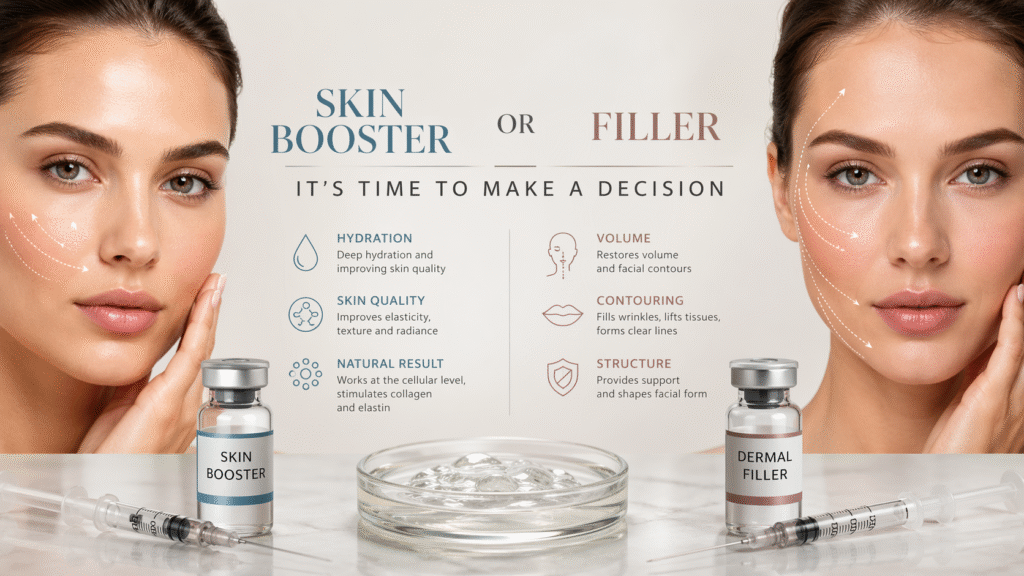
Whitening injections fit well into comprehensive care programs. Glutathione and vitamin C are often combined with procedures aimed at the quality and hydration of the skin – for example, with skin boosters and mesotherapy, which enhances the overall effect of radiance.
A brightening course can also run in parallel with anti-aging protocols, since antioxidant support is useful for the prevention of premature aging. When building a combined program, it's important to observe the intervals between procedures and to coordinate the sequence so as not to overload the skin.
Contraindications, safety, and the evidence base
Like any injectable procedure, the administration of glutathione has limitations. The contraindications include pregnancy and the lactation period, individual intolerance to the components, acute illnesses, as well as a number of chronic conditions that require caution. Before starting the course, a consultation with the collection of a medical history is necessary.
The question of the evidence base is worth noting separately. The scientific data on the effectiveness and long-term safety of whitening injections are limited and inconclusive, and the regulatory status of glutathione as a skin-whitening agent varies across different jurisdictions. For this reason, the procedure should be carried out exclusively under the supervision of a qualified practitioner, with realistic expectations and without exceeding the recommended dosages.
A number of myths have built up around glutathione injections. The first is that the result is visible right away, in reality, the effect is cumulative and requires a course. The second is that glutathione radically "bleaches" the skin by several shades, it's more accurate to speak of evening out the tone, reducing pigmentation, and adding radiance, rather, than of changing the natural shade. The third myth is that the result lasts forever, without maintenance procedures and sun protection, the tone gradually returns to its original state. The fourth is that tablets give the same effect, a significant portion of oral glutathione is broken down in the gastrointestinal tract, which is why the injectable form is considered more bioavailable.
What specialists should keep in mind
The result depends directly on the practitioner's qualifications, a correct protocol, and the quality of the product. Before the course, it's important to assess the skin type and tone, collect a medical history, and form realistic expectations in the patient. A competent combination of glutathione with vitamin C and supportive procedures increases satisfaction with the result.
Just as important are the authenticity of the product and compliance with storage and transport conditions. Whitening formulas are sensitive to the temperature regime and storage conditions, and the market is saturated with questionable products. It's worth working only with verified products from reliable suppliers with a complete package of accompanying documents.
Glutathione injections have become a sought-after tool for those who want to achieve a more even tone, a reduction in pigmentation, and an effect of healthy skin radiance. In combination with vitamin C, glutathione works as a powerful antioxidant duo that supports not only color but also the overall quality of the skin. This isn't an instant "bleaching" but gradual, cumulative work that – with a competent protocol, realistic expectations, and quality products – allows the practitioner to offer patients a safe and predictable result.