Every week our support inbox receives some version of the same question: "Which filler should I order?" And every week we give the same honest answer: it depends on what tissue you are working with and what result the patient expects. There is no universal filler, and any supplier who claims otherwise is selling you a compromise. So instead of answering one message at a time, here is the logic laid out properly, the way we explain it to clinics ordering from us for the first time.
What a modern HA filler actually is
Hyaluronic acid itself is nothing exotic, your skin produces it daily and loses it just as steadily with age. The molecule binds water, up to a thousand times its own weight, which is exactly why depleted HA reads on the face as dryness, deflation, and folds that no cream reaches. An injectable filler is stabilized hyaluronic acid: individual chains are cross-linked into a gel that resists enzymatic breakdown and holds its shape in tissue for months instead of hours.
The degree and technology of that cross-linking is where fillers stop being interchangeable. Manufacturers adjust particle size, cohesivity, and elasticity, and the result is a full spectrum of gels, from nearly liquid to firm enough to mimic bone. Korean laboratories have spent two decades perfecting this product line, and the results speak for themselves, high purification standards, minimal residual cross-linking agents, and a reasonable price point driven by large-scale production. It is precisely this combination that led to the creation of our catalog.
Soft, medium, dense: the working classification
Soft, low-viscosity spread evenly and integrate into thin, mobile tissue. Their territory is lips, that should stay soft to the touch, fine perioral lines, and, of course, delicate surface work where a firm product would leave visible ridges. Medium-density fillers are the workhorses of the mid-face, nasolabial folds, marionette lines, gentle volume restoration in the cheeks. They strike a balance between lifting and flexibility, allowing the face to retain natural movement. Dense gels with a high G-prime value possess structural properties. Whether enhancing chin projection, defining the jawline, contouring the cheekbones, or correcting the bridge of the nose – wherever the product must withstand tissue pressure and maintain its shape – density is crucial. If you choose a version that is too soft, the result will dissolve into the tissues within just a few weeks.
How long results last, honestly
Claims regarding the longevity of fillers often involve the most exaggerated figures in the industry, so here are the realistic ranges. Soft gels used in dynamic areas, such as the lips, typically last six to nine months, as constant muscle movement accelerates their breakdown. Medium-viscosity fillers in the mid-face generally last nine to twelve months. Dense, structural gels used in areas with minimal movement can last anywhere from twelve to eighteen months. Metabolism, injection depth, and lifestyle choices can all influence these timeframes, for instance, a marathon runner will metabolize filler faster than a sedentary patient – a result of biological processes rather than product ineffectiveness.
Another important point is that the effects of hyaluronic acid-based fillers can be neutralized using hyaluronidase, this reversibility is not merely a footnote but a crucial safety factor. This is largely why hyaluronic acid remains the preferred choice over permanent fillers.

Where fillers end and other products begin
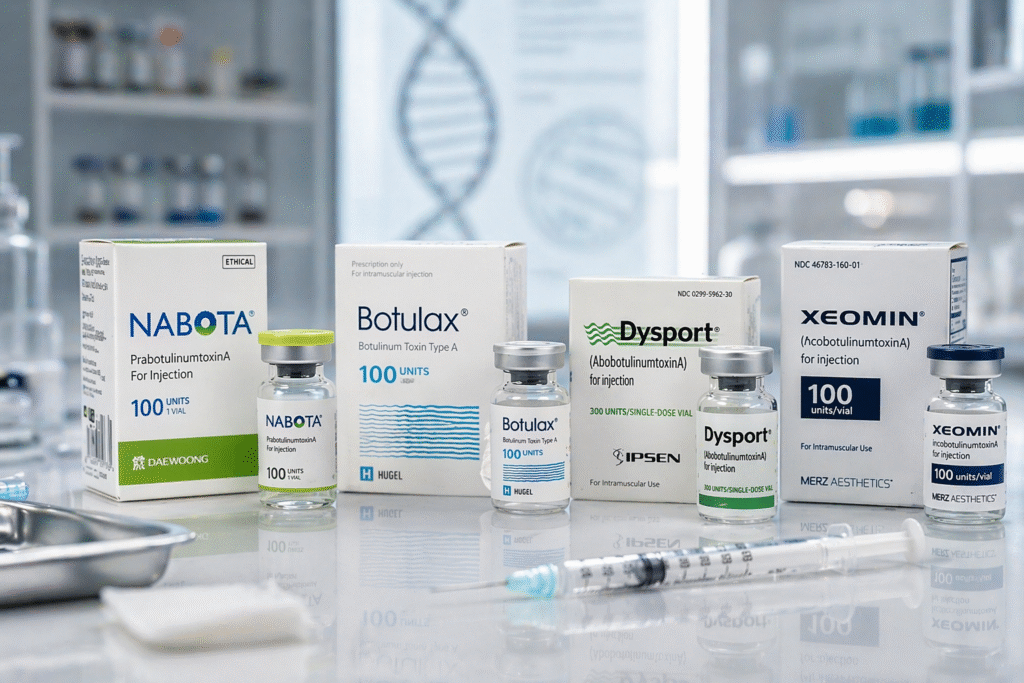
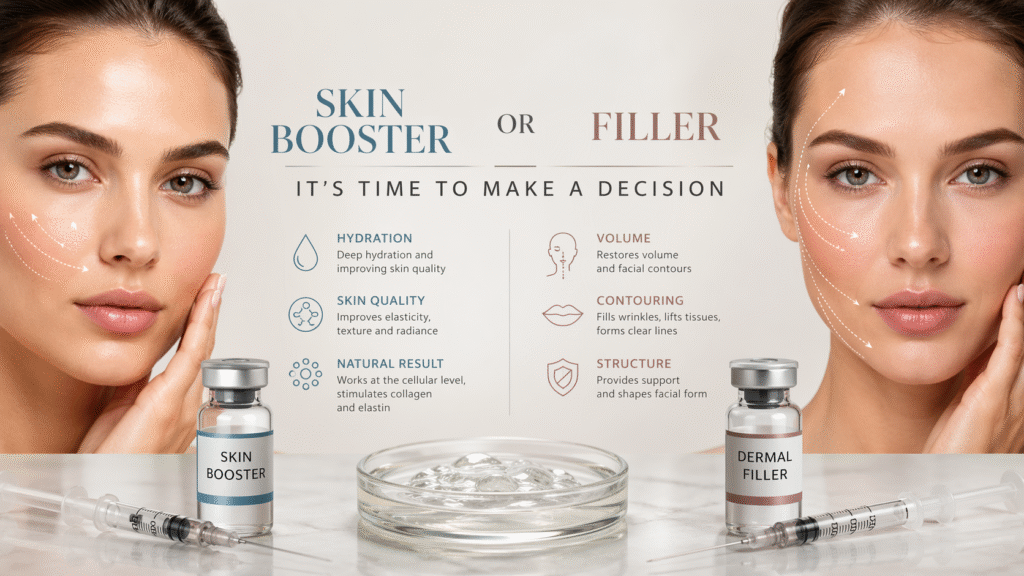
A short map, because our clients mix these categories more often, than you would think. A filler creates volume and structure, that is its whole job. Skin boosters, which we covered in a separate article, are unstabilized or lightly stabilized HA spread thinly for hydration and glow, with no lifting effect at all. Polynucleotides restore tissue quality rather than shape. Botulinum toxin does not fill anything, it relaxes muscles. Four tools mean four distinct tasks; the most natural results in modern aesthetic medicine are achieved by combining them during treatments, rather than trying to solve every problem with a single product. When a clinic places an order that includes toxin, a booster, and fillers of two different densities, we usually realize they know exactly what they are doing. However, if an order consists of ten identical syringes containing the densest gel in our range, we sometimes ask a clarifying question first. This habit has helped prevent more errors than any liability warnings ever could.
What separates a good filler from a risky one
Since we sell these products, we will tell you exactly what we check before a brand enters our catalog. Regulatory approval in Korea, batch documentation, stable cold-chain-independent storage, low protein and endotoxin content, and a manufacturer with a real factory rather than a rebranding operation. The Korean market is competitive enough that weak products do not survive long, which quietly does part of our quality control for us. Still, we reject brands every year, and we would rather carry a shorter catalog than explain a complication to a client.
We consistently emphasize in every product description that fillers are medical devices intended for administration by qualified, licensed specialists. Procedural technique, anatomical knowledge, and the ability to manage complications are just as important as the gel inside the syringe itself. We supply clinics and practitioners with the products, while the expertise remains in their hands.
Ordering logic that saves money
A practical closing thought from the commercial side. Fillers have long shelf lives and stable storage requirements, so ordering an assortment in one shipment nearly always beats ordering single syringes repeatedly, shipping is the expensive part, not the product. If you are unsure which texture to choose for your first order, please contact us, and we will help you to choose the right one.