Botulinum toxin type A softens expression lines by temporarily reducing the release of acetylcholine, the chemical signal that tells a muscle to contract. When the treated muscle contracts less strongly, the skin above it folds less during facial expressions. Lines that are visible at rest can still remain, because muscle movement is only one cause of wrinkles.
This guide comes from KoreaDerma, a supplier of Korean aesthetic medical products based in South Korea. It covers how the toxin acts, which wrinkles respond, how long the effect usually lasts and how to read a product label. It is written for people considering treatment and for licensed professionals.
What happens at the nerve ending
Botulinum toxin type A acts where a nerve meets a muscle. It reduces the chemical signal that starts each contraction, so the muscle pulls with less force for a period of months.
How acetylcholine triggers muscle contraction
Every facial expression begins with a signal from a motor nerve. At the neuromuscular junction, the nerve ending stores acetylcholine in tiny sacs called vesicles. When a signal arrives, the vesicles fuse with the outer membrane of the nerve ending and release acetylcholine into the narrow gap beside the muscle fiber. Acetylcholine binds to receptors on the muscle, and the fiber contracts. The same chain of events drives every voluntary muscle in the body, from the jaw to the hand.
Many facial muscles attach directly to the skin. Each time they contract, they pull the skin into a fold. Over years of frowning, smiling and squinting, those folds can turn into visible lines.
What botulinum toxin type A changes
Botulinum toxin type A binds to nerve endings in the treated muscle and is taken inside them. There it cuts SNAP-25, a protein the nerve ending needs to fuse vesicles with its membrane and release acetylcholine. With less acetylcholine released, the muscle receives a weaker signal and contracts less strongly. Section 12.1 of the BOTOX Cosmetic prescribing information describes this sequence.
The nerve itself is not destroyed, and its signaling recovers over the following months. While the effect lasts, a weaker frown or squint makes a shallower fold, so the line it creates is less visible during that expression. In the mirror, this usually shows up as a softer frown, with less bunching of the skin between the brows.
Which wrinkles respond to botulinum toxin
Botulinum toxin has the clearest effect on dynamic lines, the ones that appear or deepen when a muscle moves. Static lines, which are visible when the face is at rest, respond less because they have other causes.
DermNet describes dynamic wrinkles as those caused by muscle movement and static wrinkles as those that do not change with movement. Wrinkles also come from sagging skin, pigment changes and loss of soft tissue, and none of these depends on muscle activity.
| Facial expression | What the line looks like | What may change |
|---|---|---|
| Frowning | Vertical lines between the eyebrows (glabellar lines) | The lines fold less when you frown |
| Raising the eyebrows | Horizontal lines across the forehead | Forehead creases are shallower when the brows lift |
| Smiling or squinting | Fan-shaped lines at the outer corners of the eyes (“crow’s feet”) | Fewer creases at the corners of the eyes when smiling |
The most compelling evidence concerns the first group. A 2021 Cochrane review, which encompassed 65 studies involving 14,919 participants, found that botulinum toxin type A reduces the severity of glabellar lines (frown lines between the eyebrows) compared to a placebo (with assessments conducted at four weeks). Most of these studies focused on glabellar lines, consequently, there is significantly less data available for other areas.
Many wrinkles that appear when a person frowns consist of two components. The fold deepens during the act of frowning, while a less pronounced mark remains on the face even when it is at rest. Breaking the habit of frowning can help soften the first component – the fold caused by muscle movement. However, the mark visible at rest may persist, as it reflects changes within the skin itself, such as the cumulative effects of long-term sun exposure, reduced elasticity, and the loss of underlying tissue volume. Botulinum toxin cannot reverse these changes. A specialist can use a mirror to demonstrate which part of a wrinkle is due to muscle movement and which part remains when the face is at rest.
How long do the results last
The effect of botulinum toxin is temporary. The American Academy of Dermatology says it lasts about 3 to 4 months, and sometimes longer.
The result develops in stages. According to the Cochrane review, muscle activity in the treated area usually drops fully within 5 to 15 days. The effect then holds for a period of weeks. After that, the nerve endings gradually recover their ability to release acetylcholine, the muscle moves more, and the lines return during expressions. The BOTOX Cosmetic label describes this recovery as reinnervation that slowly reverses the effect. Because the change is gradual, movement comes back over weeks rather than on a single day. When it wears off, the face moves the way it did before treatment, and AAD notes that another treatment can follow once the lines return.
Timing varies with the product, the treated area, the amount the provider uses and each person’s response. A figure for one product belongs to its own label or study. The BOTOX Cosmetic label, for example, gives about 3 to 4 months for glabellar lines. Other products have their own labels, and their figures should not be borrowed across brands.
Safety and what to ask your provider
Botulinum toxin injections should be given only by a licensed, trained professional using a product from an authorized source. Most side effects are mild and short-lived, but a few need urgent care.
A common local effect is bruising at the injection site, which AAD says lasts about a week. Less often, the toxin weakens a neighboring muscle and causes a temporarily drooping eyelid or brow. The Cochrane review found that treatment probably increases the risk of a drooping eyelid.
Every US-approved botulinum toxin label, including the BOTOX Cosmetic label, carries a boxed warning. The toxin effect may spread beyond the injection area and cause generalized muscle weakness, double vision, drooping eyelids, and trouble swallowing, speaking or breathing, hours to weeks after treatment. Swallowing and breathing problems can be life threatening. Anyone who notices these symptoms after an injection needs emergency medical care right away, as CDC advises.
For readers in the United States, CDC suggests a practical question before treatment: is this product FDA-approved, and was it bought from an authorized supplier? Ask for the exact product name and check that the provider holds a valid license.
KoreaDerma’s guide to botulinum toxin labels
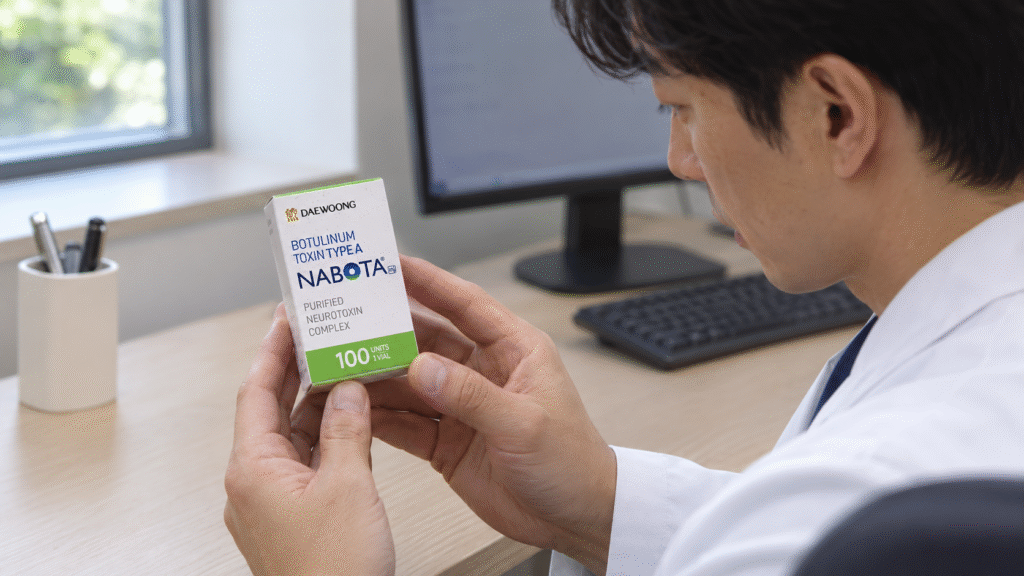
A botulinum toxin label tells you three separate things: the active ingredient, the brand name and the approval that applies to that exact product in a given country. Reading them one at a time prevents most mix-ups.
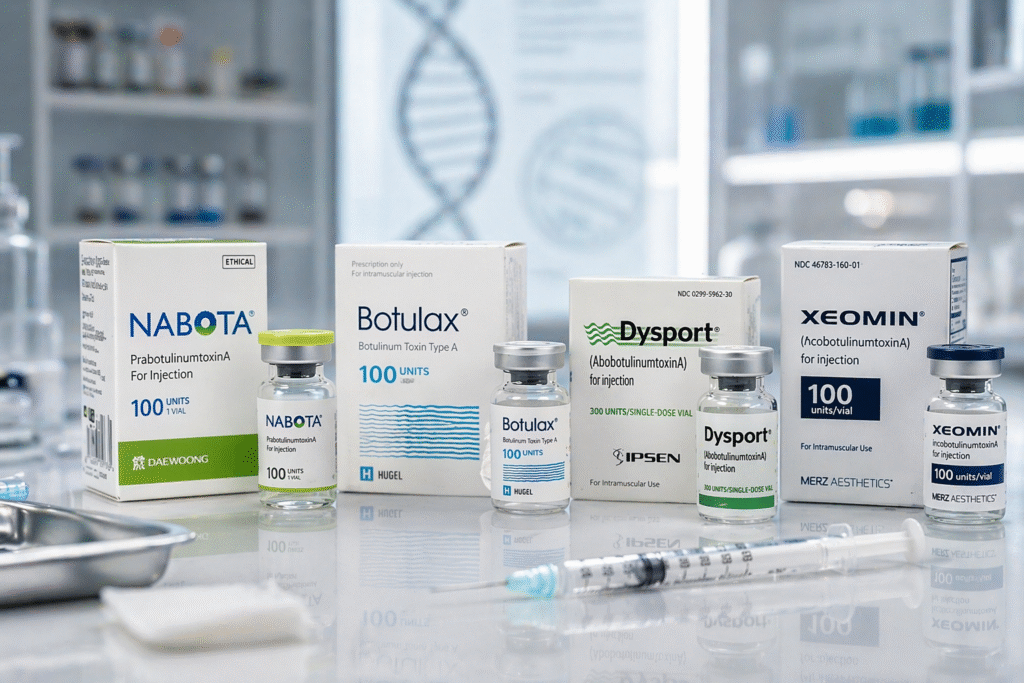
Start with the active ingredient. In the US, each botulinum toxin type A has its own nonproprietary name: onabotulinumtoxinA is sold as BOTOX Cosmetic, prabotulinumtoxinA-xvfs as Jeuveau and letibotulinumtoxinA-wlbg as Letybo. The trade name is the brand printed on the carton. Next to it you will find the form, either a powder that is reconstituted before use or a ready-to-use liquid, and the number of units in the vial.
Then compare the product with the local label and registry. An approval belongs to one product in one presentation in one country. The FDA approvals of Jeuveau and Letybo cover those registered products and their US labeling. Korean cartons sold as Nabota (Daewoong Pharmaceutical), Botulax (Hugel) or Innotox (Medytox) are different presentations. FDA warning letters to other online sellers name products marketed as Nabota 100UI, Botulax 100 units and Innotox 50 units as unapproved in the US.
Units are product-specific. The BOTOX Cosmetic label states that its units cannot be compared with or converted into units of other botulinum toxin products, so the same number on two vials does not mean the same strength. Finally, match the supplier name and the lot number on the carton with the supplier’s documents.
For professional inquiries about Korean aesthetic products, contact KoreaDerma.
Frequently asked questions
Does botulinum toxin fill wrinkles?
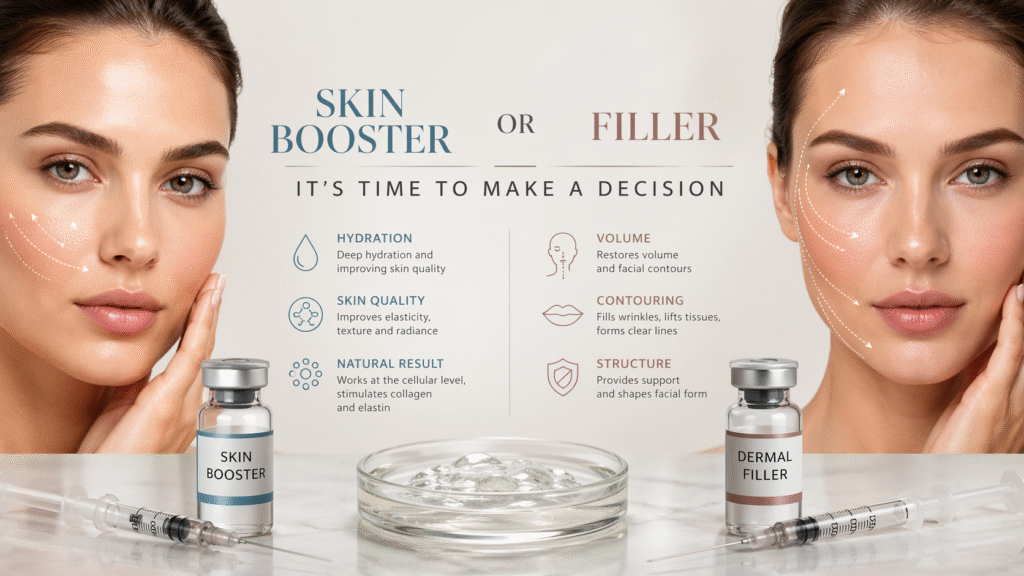
No. Botulinum toxin does not add volume or fill in folds. It weakens the contractions of the muscles it targets, which means the skin creases less during facial expressions. If a wrinkle has formed primarily due to a loss of volume or thinning of the skin, the procedure will have almost no effect on it – which is why, in such cases, specialists may suggest other methods, such as the use of dermal fillers.
Will I still be able to make facial expressions?
Usually yes, although the treated area moves less. How much movement remains depends on the muscle, the product, the amount used and your own response, so results differ between people and between sessions. Muscles outside the treated area usually move as before. If you want to keep some movement, say so at the consultation so the plan can reflect that goal.
Can it soften a line that shows when my face is relaxed?
Sometimes, and only in part. If a line deepens with movement and also shows at rest, treatment mainly softens the moving part. The crease at rest reflects sun damage, lower elasticity or volume loss. A review in American Family Physician notes that static lines respond more slowly, and deep ones may not respond.
Is Botox the same as botulinum toxin type A?
Not exactly. BOTOX Cosmetic is one brand of botulinum toxin type A, the ingredient onabotulinumtoxinA, made by Allergan Aesthetics, part of AbbVie. Botulinum toxin type A is the wider class, which includes other products with their own names, labels and potency units. Using “Botox” for every product hides these differences. Our Nabota vs Botox article compares two brands.
What should I ask before treatment?
Ask which exact product will be used, by trade name and active ingredient, and whether it is approved in your country for this use. In the US, CDC suggests confirming that the product is FDA-approved and came from an authorized supplier. Also ask about the provider’s license and training, the expected timeline, possible side effects and whom to contact if a problem appears.