Korean Botox safety: side effects, reviews and what professionals should know
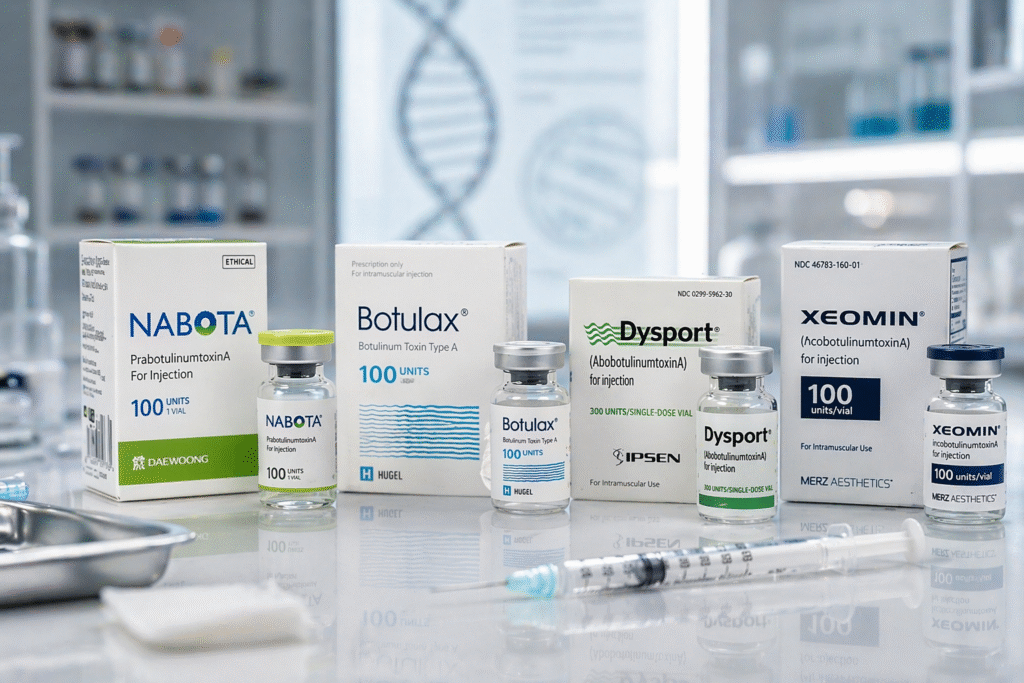
"Korean Botox" is an informal search term for botulinum toxin type A products manufactured in South Korea. Each product has its own manufacturer, formulation, potency assay, storage requirements, approved indications and country-by-country registration status. A treatment is only as safe as the combination behind it, an authentic, correctly stored product, an appropriate patient, and a licensed professional authorized to inject in that jurisdiction. KoreaDerma lists several Korean botulinum toxin brands in a dedicated professional catalog, but listing is not authorization – practitioners must confirm whether a specific product may be purchased, imported and used where they practice.
What Does "Korean Botox" Mean?
"Korean Botox" is a colloquial phrase used when searching for botulinum toxin products made in South Korea. Botox is a registered trade name belonging to one product, onabotulinumtoxinA, not the generic name for the category. The accurate umbrella term is botulinum toxin type A : a purified protein produced by Clostridium botulinum that temporarily reduces signaling at the neuromuscular junction. These drugs are also called neuromodulators .
The products users have in mind are separate drugs from separate companies, differing in manufacturing process, excipients, presentation (freeze-dried powder, vacuum-dried powder or ready-to-use liquid), potency assay, labeled indications and registration status. Two vials both marked "100 units" are not automatically equivalent, because units are defined by each manufacturer's own assay for its own preparation. Where official documentation gives an exact active-substance name, letibotulinumtoxinA-wlbg, prabotulinumtoxinA-xvfs, that name identifies the product, not the word "Botox."
Are Korean botulinum toxin products safe and effective?
Some Korean botulinum toxin products have clinical trial data and regulatory approvals in specific countries, but it is not accurate to claim that all Korean botulinum toxin products are equally safe, equally effective, or legal to use in any jurisdiction.
Safety and effectiveness are assessed for one product, at one dose, for one indication – never for a country of origin. Regulatory approval means a national authority reviewed that product's evidence and authorized defined uses in that market. Approval by South Korea's Ministry of Food and Drug Safety (MFDS) is not approval by the FDA, Health Canada or the EMA, and approval of one company's product says nothing about a different brand.
Common Botox side effects
The side effects listed for any botulinum toxin product, and how often they occur, come from that product's approved labeling for a specific indication, so practitioners should read the prescribing information for the exact product in hand. An adverse effect is any unwanted response associated with a treatment. Reactions commonly described after botulinum toxin injections are mostly local and temporary:
- pain, tenderness or discomfort at the injection site
- redness
- localized swelling
- small bruises
- headache
- temporary weakness of nearby muscles that were not the target
- temporary asymmetry
- drooping of an eyelid or eyebrow
- dry eye or altered tear production, depending on the area treated and the product used
Serious side effects and warning signs
Serious systemic reactions are far less common than local, temporary effects, but they call for immediate medical assessment rather than watchful waiting. Approved labeling carries warnings about effects of the toxin spreading beyond the injection site, and these are not always immediate, they may appear hours, days or weeks after treatment. Serious allergic reactions are also documented in product labeling.
Symptoms that require urgent medical care include:
- difficulty breathing
- difficulty swallowing
- slurred or impaired speech
- pronounced or spreading muscle weakness
- double vision or significant vision changes
- signs of a serious allergic reaction, such as hives, wheezing, swelling or faintness
- rapidly progressing neurological symptoms
Emergency note: Difficulty breathing, swallowing or speaking after a botulinum toxin injection requires immediate medical attention.
Managing a suspected complication is a matter for emergency and specialist care, not self-treatment.
What determines Botox injection safety?
Cosmetic procedure safety is not a property of a brand. It is the product of five verifiable things: what the product is, who injects it, who receives it, how it was stored, and how it is dosed.
The specific product and its regulatory status
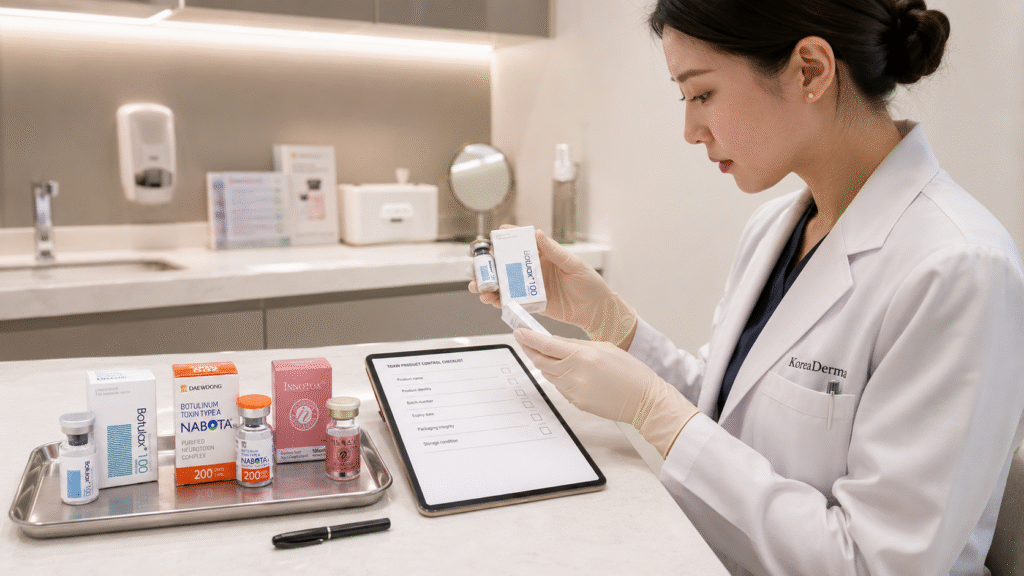
Before purchase and before use, verify the exact trade name printed on the carton, the manufacturer, the active substance as named in official documentation, the countries of registration, the approved indications, the current official labeling, and the batch number and expiry date on the vial. "FDA approved" should never be applied to a brand as a whole: approval attaches to a specific trade name, presentation and indication, and must be checked against the regulator's own records.
The qualifications of the injector
Botulinum toxin injections should be performed only by professionals legally authorized to do so in their jurisdiction, with working knowledge of anatomy, contraindications, drug interactions and complication management. Excellent brand reviews do not compensate for inadequate training. This article deliberately contains no technique, injection points or dosing guidance.
Medical screening and patient selection
Before treatment, a clinician assesses medical history, current medications and interactions, the condition of the treatment area, conditions that may raise risk, and any previous reaction to botulinum toxin products. This is a clinical judgment, not a checklist a patient completes alone.
Storage and transportation
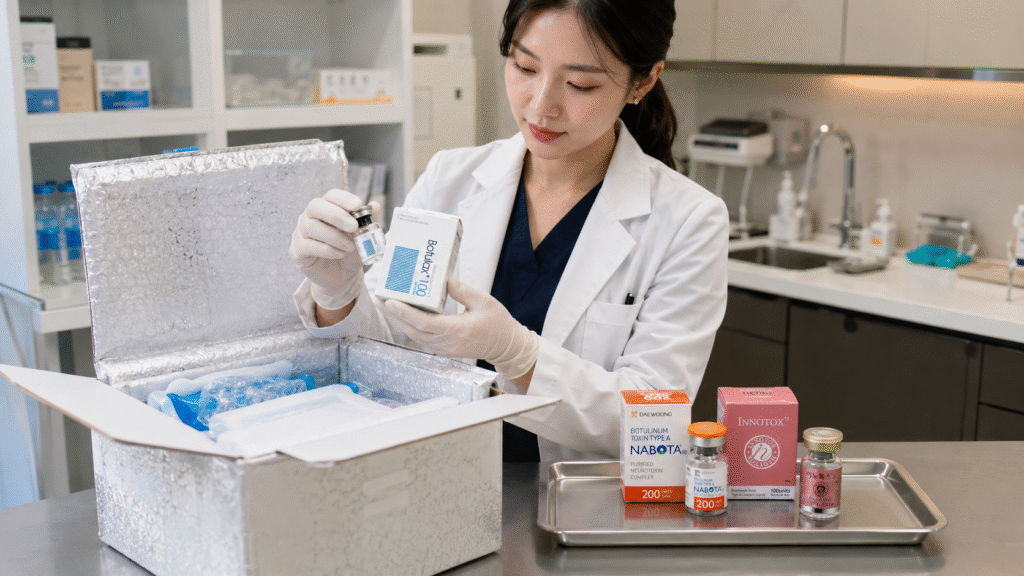
Stability requirements are set by each manufacturer for each product, and one brand's conditions cannot be assumed for another. What matters is the temperature range in that product's labeling, the integrity of the original packaging and vial, the expiry date, and the stated limits after reconstitution. On receipt, a professional should check the goods against those official requirements before use.
KoreaDerma states that toxin products are packed in insulated packaging with ice packs and shipped from South Korea, and warns that ice packs may melt in hot weather. That is logistics information, not evidence about the medical safety of a specific vial. Reduced potency and compromised safety are also different questions, and neither can be concluded from package temperature alone.
Korean beauty treatments and their different safety profiles
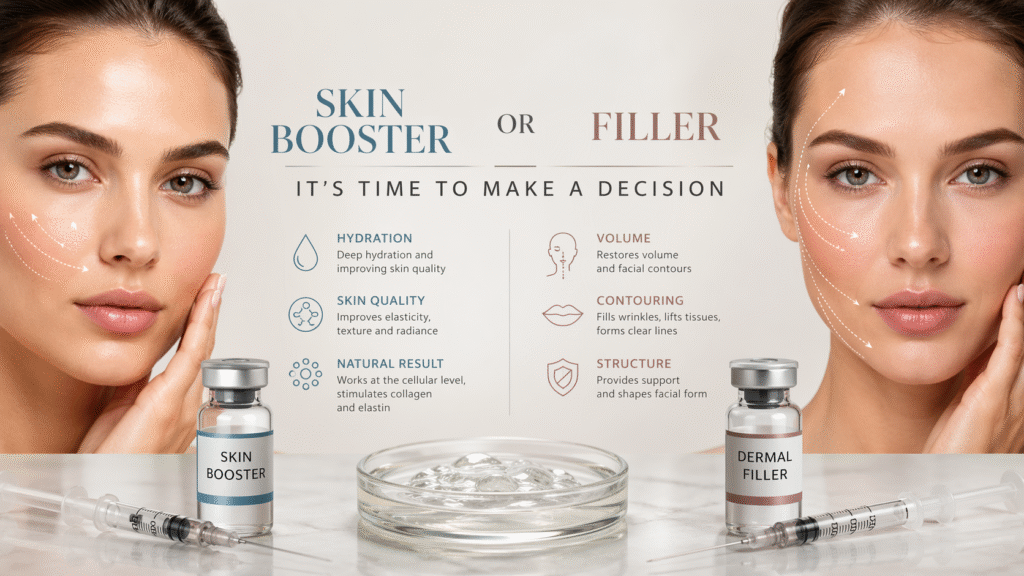
Korean cosmetic procedures encompass several categories of products, that differ in their mechanisms of action and associated risks. The proven safety of one category does not guarantee the safety of another.
|
Category |
How it works |
Typical format |
Main safety consideration |
|---|---|---|---|
|
Botulinum toxin |
Temporarily reduces targeted muscle activity |
Injectable drug |
Product status, qualified administration, toxin-specific risks |
|
Dermal fillers |
Add volume or structural support |
Injectable gel or implantable material |
Vascular and injection-related complications |
Safety considerations for Korean skincare products differ from those associated with injectable procedures. In the context of Korean cosmetics, safety primarily refers to how well the skin tolerates a specific product during topical application. Actual risks include irritation, contact allergies, dryness, and a burning sensation, as well as the incompatibility of active ingredients when used together – for instance, the simultaneous application of multiple types of exfoliating acids and retinoids.
Korean skincare products work differently than botulinum toxin injections. Creams, serums, and essences act on or near the skin's surface rather than being injected into the muscle, consequently, their risk profile, onset of action, and effects are not comparable to those of injectable products.
How KoreaDerma presents Korean toxin products
KoreaDerma maintains a dedicated botulinum toxin category that gathers several Korean brands in one professional catalog, so buyers can compare product names, unit counts and vial formats in one place. Of course, orders ship from South Korea, tracking is provided by email, and delivery terms appear on the shipping information page.
These injectable products are intended only for qualified professional use. One responsibility cannot be delegated to a seller, the buyer and the treating professional must verify whether purchase, import, storage and clinical use of a specific product are permitted in their own country.
F A Q
What are the most common Botox side effects?
The most commonly described reactions are local and temporary, injection-site pain or tenderness, redness, swelling, small bruises, headache, temporary weakness of nearby muscles, and temporary asymmetry such as eyelid or brow drooping. Depending on the area treated, dry eye or altered tearing may also occur. The exact list and frequency depend on the specific product and indication, and should be read in that product's official labeling.
Can Botox side effects appear several days after treatment?
Yes. Some effects appear within hours, while others – including effects associated with spread of the toxin beyond the injection site – may develop days or even weeks after treatment. This is why patients should be told which symptoms to watch for after leaving the clinic. The specific warnings, timing and reporting instructions for any product are stated in its official prescribing information.
Are Korean botulinum toxin products FDA-approved?
FDA approval applies to a specific product, presentation and indication, not to all products from South Korea. Two examples: Letybo (letibotulinumtoxinA-wlbg) from Hugel was FDA-approved in February 2024 for glabellar lines, and Jeuveau (prabotulinumtoxinA-xvfs), marketed by Evolus, was FDA-approved in February 2019 for the same indication. That status does not extend to Botulax, Nabota or other Korean-market brands, and it should always be confirmed against the FDA's own records for the exact trade name.
Is Botulax the same as Letybo?
No. Botulax and Letybo are different products with different trade names and different registrations. Letybo (letibotulinumtoxinA-wlbg) is Hugel's FDA-approved US product for glabellar lines, with its own US labeling and vial presentations. Botulax is a separate Hugel trade name marketed in other territories. It is inaccurate to say that Botulax is registered in the United States under the name Letybo.
Can different botulinum toxin units be compared directly?
No. Units are product-specific and are defined by each manufacturer's own potency assay for its own preparation. Approved botulinum toxin labeling states that units are not interchangeable between products. Two vials labeled 100 units are therefore not demonstrated to be equally potent, and units must never be converted between brands informally. Dosing comparisons belong to official labeling and established professional protocols.
Are Korean beauty treatments safe?
It depends on which treatment, which product, which indication and which practitioner. Botulinum toxin, dermal fillers, skin boosters and topical skincare have different mechanisms, formats and risk profiles, so no single verdict covers them all. Safety demonstrated for one category or product does not carry over to another, and country of origin is not itself a safety indicator for any of them.