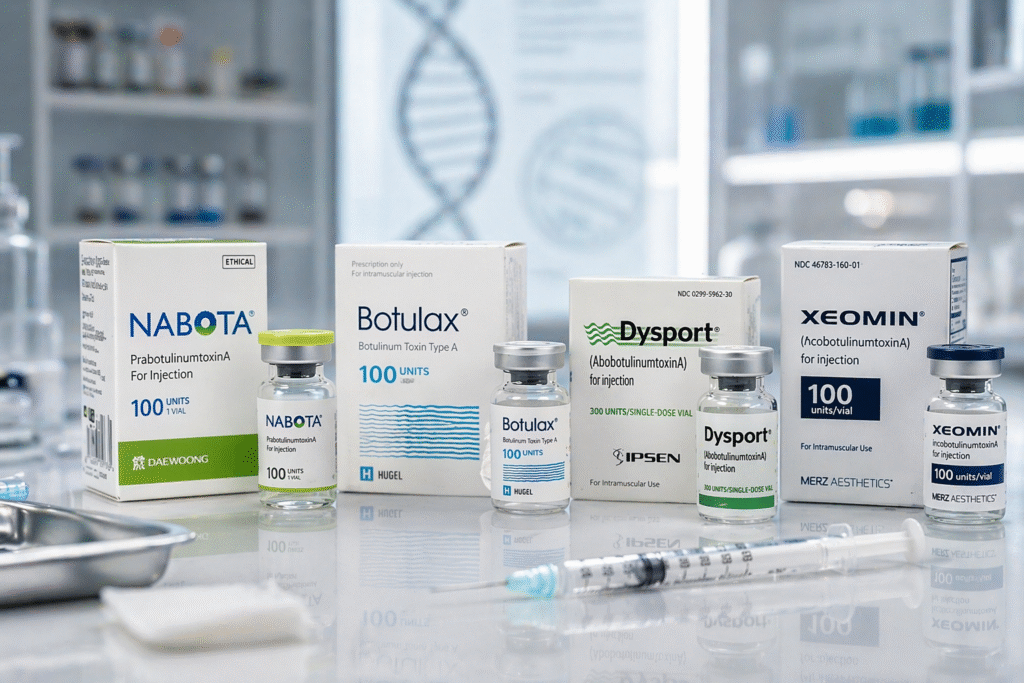
It depends on the exact product and the evidence behind it. Some Korean botulinum toxins and hyaluronic acid (HA) fillers have randomized trial data, and some Korean-made toxins hold FDA approval for specific indications. Those findings belong to the studied product, version and market, not to everything made in South Korea. “Korean Botox” is informal shorthand for Korean botulinum toxin type A; BOTOX is a trademark of one specific product. This guide covers the evidence, buyer checks and how to compare products in the Korea Derma catalog.
What clinical evidence can tell us
Clinical trials show how one product performed for one indication under study conditions. They do not certify a brand family or a country’s entire output.
Two examples show both the value and the limits of published data. A randomized, double-blind, placebo-controlled phase III trial included 540 adults with moderate to severe glabellar lines, and a single treatment with prabotulinumtoxinA was found to be noninferior to onabotulinumtoxinA, based on the primary endpoint for treatment response at day 30.
On the filler side, a randomized, double-masked, split-face trial published in 2015 followed 67 subjects for 24 weeks and found Neuramis Deep noninferior to Restylane for nasolabial fold correction.
The concept of “non-inferiority” means that the product under investigation proved to be no worse than the comparator – the difference between them did not exceed a pre-established limit. This does not imply, that the product was superior. These findings apply only to the specific formulations, indications, and conditions that were studied. They cannot be automatically extended to all Korean brands, the entire Neuramis product line, or other items in the catalog without first confirming that the product in question is, in fact, the exact same version.
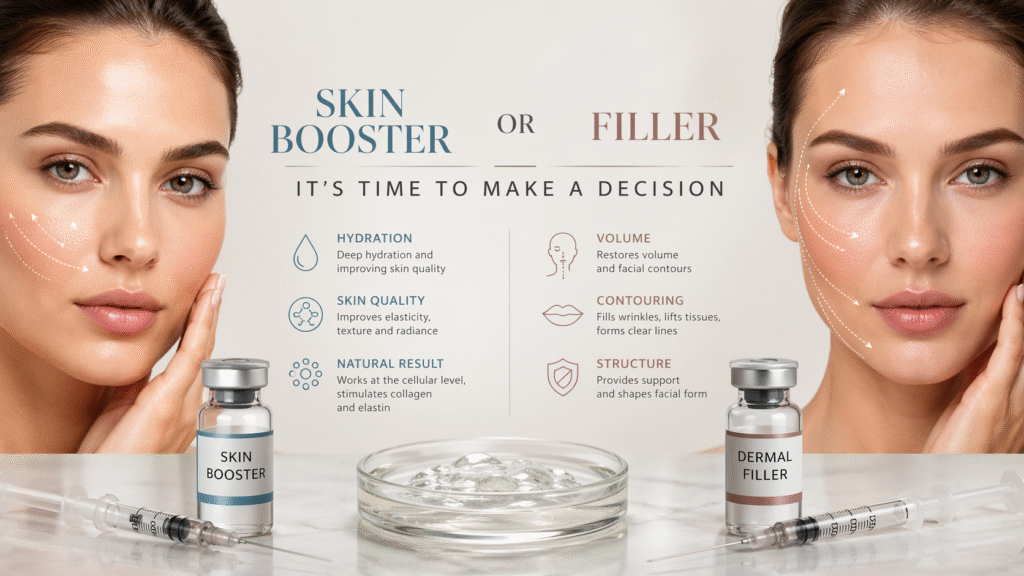
Toxins and fillers carry different risks, as they function in distinct ways. Botulinum toxin type A temporarily reduces the activity of specific muscles, whereas a hyaluronic acid (HA)-based filler increases soft tissue volume or provides structural support to the tissues.
Both can cause temporary injection-site reactions such as pain, swelling or bruising. The labeling for the product JEUVEAU (USA) lists headache and eyelid ptosis as adverse reactions, furthermore, the document includes a boxed warning stating that the toxin’s effect may spread beyond the injection site, potentially causing difficulty in swallowing and breathing, which can be life-threatening. For fillers, FDA calls unintended injection into a blood vessel the most concerning risk, with reported complications including tissue necrosis, vision problems including blindness, and stroke.
Neither class is without risk, and filler complications are not always reversible. Anyone who has trouble breathing or swallowing, or sudden vision changes, after an injection needs urgent medical care. For more on toxin side effects, see our Korean Botox safety guide.
The possibility of approval depends on the specific product and country
Clinical evidence, authenticity, and registration address different questions, and one cannot substitute for another.
In the United States, JEUVEAU (prabotulinumtoxinA-xvfs) is FDA-approved for the temporary improvement of moderate to severe glabellar lines in adults. LETYBO (letibotulinumtoxinA-wlbg) received FDA approval for the same indication on February 29, 2024. This status applies to specific products that carry U.S. labeling, and their permitted use is defined by the current labeling, which is subject to change. It does not extend to NABOTA or BOTULAX, even if they are manufactured by the same company.
Korean toxins and fillers at Korea Derma
Korea Derma is an online store of professional aesthetic products, not a clinic, and does not perform treatments. The catalog lets clinic buyers and aesthetic professionals compare Korean botulinum toxin products and Korean dermal fillers by class, exact name and pack size.
|
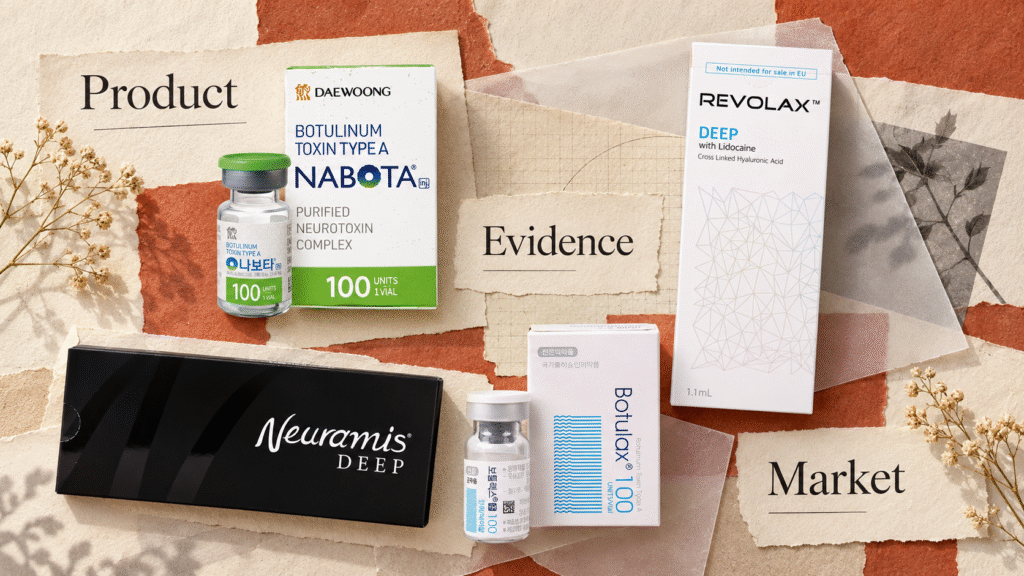
Examples from the Korea Derma catalog. This is a product list, not a ranking of safety or clinical effectiveness. |
||
|---|---|---|
|
Product |
Category |
Pack size |
|
NABOTA 100 units |
Botulinum toxin type A |
100 units / vial |
|
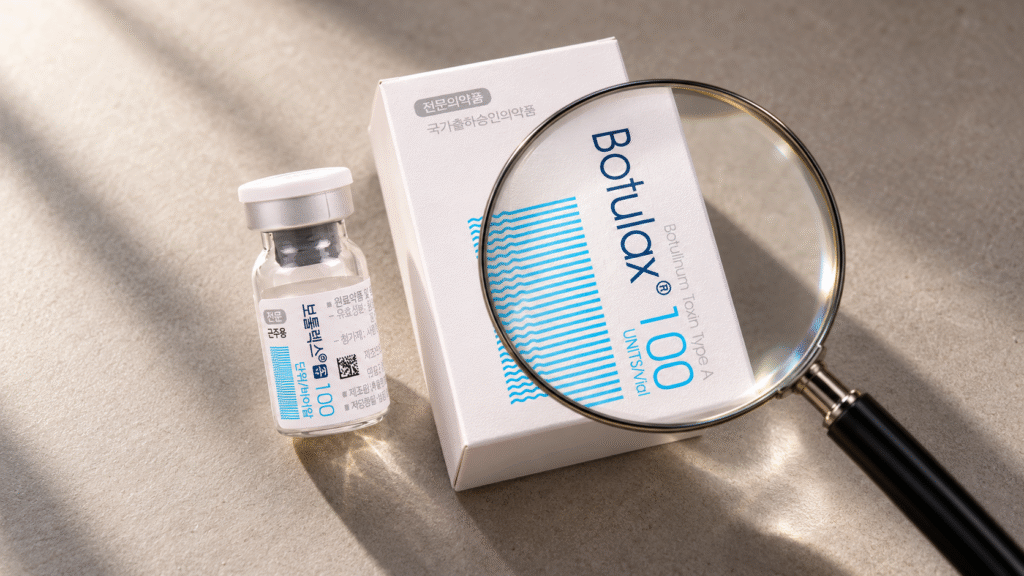
BOTULAX 100 units |
Botulinum toxin type A |
100 units / vial |
|
REVOLAX Deep 1.1ml |
HA filler with lidocaine |
1.1 mL / syringe |
|
NEURAMIS Deep No Lidocaine 1ml |
HA filler without lidocaine |
1 mL / syringe |
Our team can help you match a listing to the exact product name, version and pack size you need, and answer order and shipping questions. Orders ship from South Korea via FedEx with tracking. Processing and dispatch take 1-2 business days, delivery time depends on the destination and customs. Buyers are responsible for confirming that import and use are permitted in their country.
Compare Korean toxins and HA fillers in the Korea Derma catalog and contact our team with product or order questions.
Frequently asked questions
Are all Korean botulinum toxin products FDA-approved?
No. FDA approval applies to a specific product, label and indication, not to a country or manufacturer. JEUVEAU and LETYBO are FDA-approved for moderate to severe glabellar lines in adults, but that status does not extend to NABOTA, BOTULAX or other Korean toxins. Always check the exact product’s authorization in your market.
Can Korean HA fillers have clinical evidence?
Yes, some do. A 2015 randomized, double-masked trial in 67 subjects found Neuramis Deep noninferior to Restylane for correcting nasolabial folds over 24 weeks. That result applies to the formulation, area and conditions studied. It does not automatically cover other Neuramis versions, other indications or other Korean filler brands.
Does an authentic product guarantee a safe treatment?
No. Authenticity confirms a product’s origin, but not that a specific vial or syringe was stored and transported as the manufacturer requires, or that it suits a given patient. Safe treatment also depends on the indication, expiration date, local authorization and a qualified professional who can assess the patient and recognize complications.
Where can professionals compare Korean toxins and fillers?
Korea Derma’s online catalog has two main categories for this: Korean botulinum toxin type A products and Korean HA dermal fillers. Professionals can compare listings by exact name, class and pack size, such as NABOTA 100 units or REVOLAX Deep 1.1ml, and contact our team with product or order questions.