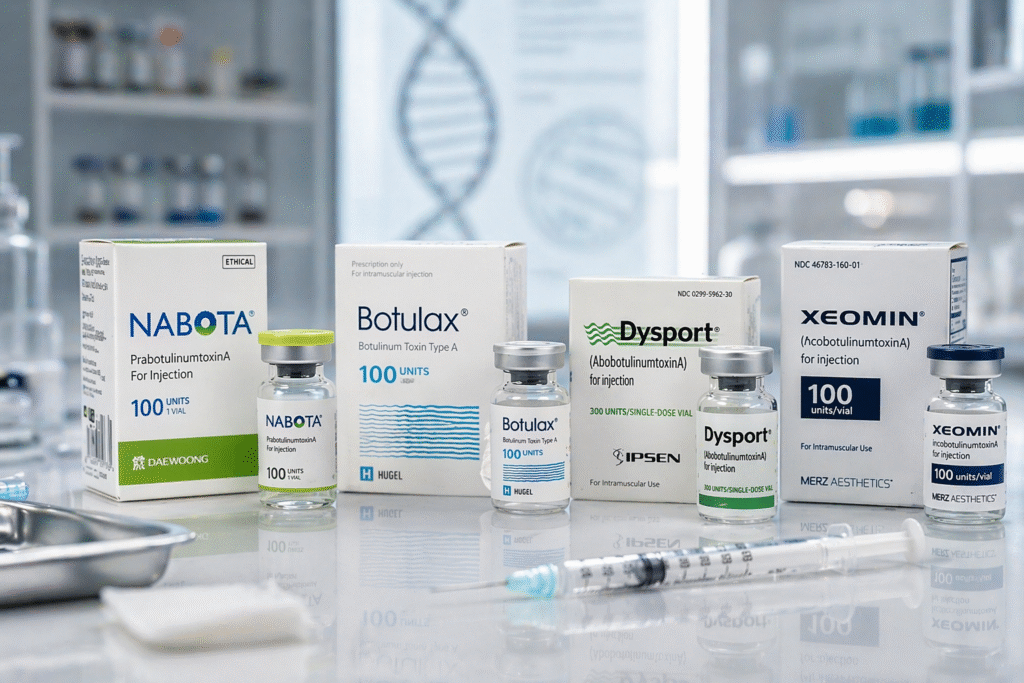
One appointment or three? Sequencing toxin, filler and boosters so they don't fight each other
A patient books ninety minutes and arrives with a list. She wants her elevens softened, her cheeks to stop looking flat in photographs, something for the dullness, and she's flying out on Thursday.
The temptation is to do all of it. She's paid for the time, she's motivated, and rebooking her feels like leaving money on the table. Then the swelling from the boosters makes the cheek volume look adequate when it isn't, and three weeks later she's back saying nothing really changed.
Combination work is where injectable practice gets genuinely interesting, and also where results quietly get worse for reasons that have nothing to do with the products. This article is about sequencing: same session, same month, or definitely not on the same day.
The planning logic, before the calendar
Rather than working down the patient's wishlist in the order she said it, it helps to sort the requests into layers.
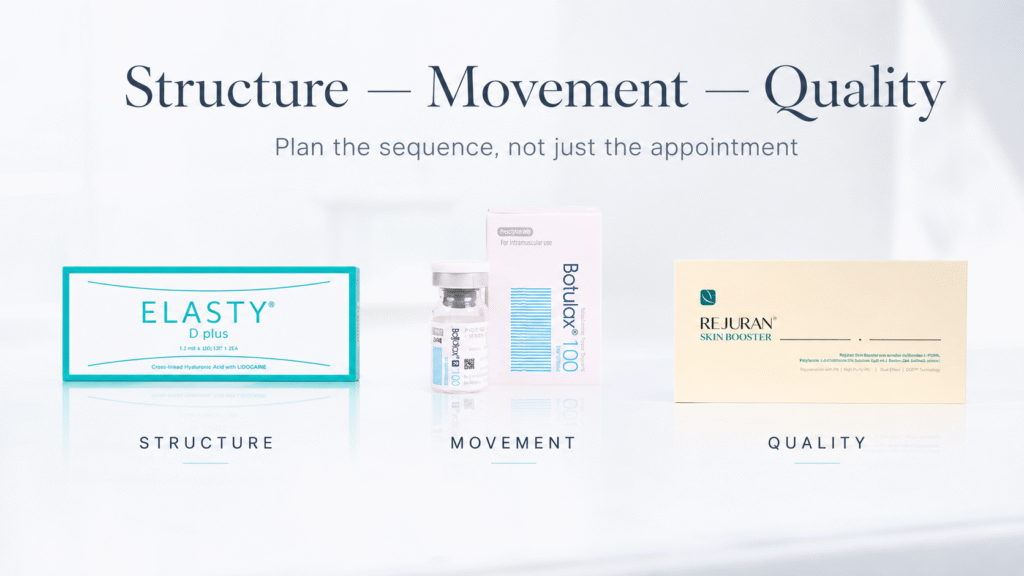
Structure – where volume sits, what the bone and deep fat compartments are doing. Fillers, mostly.
Movement – which muscles are pulling and how hard. Toxin.
Quality – texture, hydration, pigment, laxity, that indefinable thing patients call "glow". Boosters, polynucleotides, exosomes, mesotherapy.
Almost every disappointing outcome we hear about comes from treating one layer while the real complaint lived in another. Someone fills a tired-looking midface that actually needed skin quality work. Someone chases fine lines with toxin when the skin is simply dehydrated.
Sorting the request into layers first also tells you the order, because these layers interact in one direction more than the other, structure changes how movement reads, and both change how quality is judged.
Toxin and filler. This is a standard, widespread practice, however, to be frank, there is no consensus among specialists on the matter.
The argument for toxin first, clean, unswollen, undistorted face, and you get to assess animation properly before anything changes shape. The argument for filler first, you're placing volume with the muscles still behaving normally, which some injectors prefer for the perioral and chin.
What matters more than which camp you join is consistency. Pick an order, use it every time, and your before-and-after comparisons start meaning something. What you shouldn't do is heavily massage a filler area within the same session as toxin above it, or let a patient lie face-down on a treatment couch immediately after.
Toxin and a booster course in different zones. Upper face toxin plus a booster grid over the cheeks is a reasonable pairing, provided you're not needling directly over fresh toxin points.
Filler and boosters in different planes. Deep structural filler and a superficial hydration treatment aren't really competing. But do the filler first and assess it properly, because booster oedema will lie to you about volume for a day or two.
Body lipolytics with facial work. Different anatomy, different practitioner attention, no meaningful interaction. The only real consideration is patient tolerance for a long session. If you're building out body treatments, the lipolytics article covers what to expect in terms of downtime.
What needs space between it
Microneedling, RF or laser over a freshly treated toxin area. The concern is heat and mechanical disruption around recently placed toxin, and while the evidence for actual clinical harm is thin, the convention of a couple of weeks is cheap insurance. Do the toxin, book the device work for a fortnight later, or reverse the order.
Energy devices over fresh filler. Same logic, more debated. Most clinics settle on two weeks in either direction and stop worrying about it.
Peels or anything that breaches the barrier over injection sites, same day. Injecting through skin you've just chemically stripped is a straightforward infection-control problem. Different day.
Big volume filler and a full booster course started simultaneously. Not because they clash pharmacologically. Because you'll have no idea which one produced the result, and neither will the patient. If you want to know what's working in your hands, don't run two experiments at once on the same face.
Anything elective within a fortnight of dental work, vaccination or an infection. This one gets ignored constantly and it's the easiest to respect. Immune events near recent filler are an unnecessary variable to invite.
Building the year, not the appointment
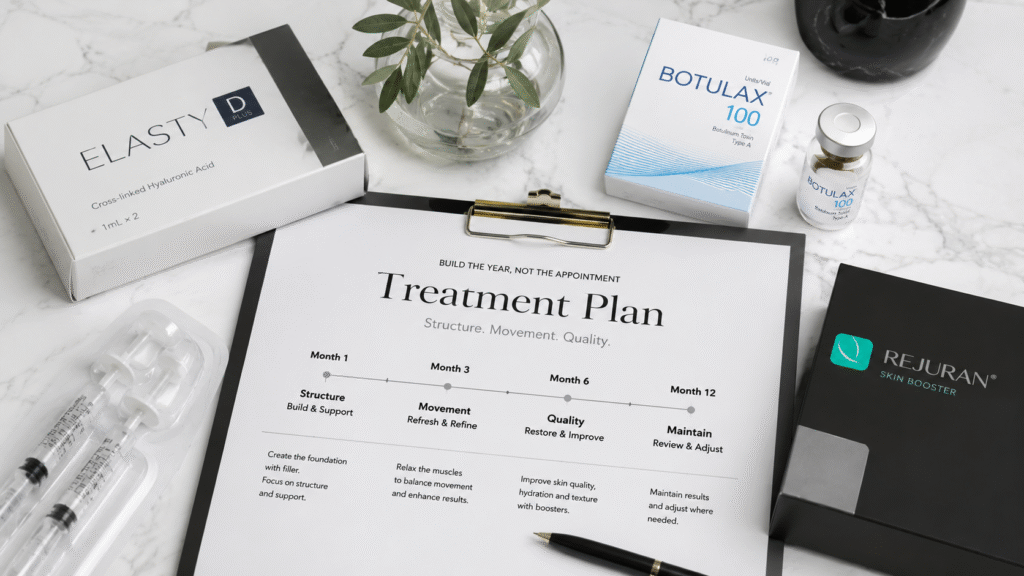
Most combination planning falls apart because it's organised around a single visit rather than a treatment year. Rough intervals to plan against:
|
Treatment |
Typical rhythm |
|---|---|
|
Botulinum toxin |
Every 3–4 months, adjusted to how the patient metabolises it |
|
HA filler |
Reviewed at 6–12 months, topped up rather than restarted |
|
Skin boosters / PN |
Initial course of 3–4 sessions two to four weeks apart, then maintenance |
|
Lipolytics |
Course of sessions with weeks between, area-dependent |
|
Whitening protocols |
Course-based, then maintenance |
Laid out that way, a sensible year looks less like "everything in March" and more like: structure once, movement quarterly, quality in courses, with review points where you actually look at photographs.
The commercial side of this is not a small point. A patient on a mapped annual plan books more, cancels less, and asks for discounts less often, than one who turns up twice a year with a wishlist. Clinics that plan this way also order more predictably, which makes them much easier to supply – we can tell within about two orders which of our clients work from a treatment calendar.
The consultation habit that fixes most of this
Photograph before you touch anything. Standardised angles, same lighting, every time.
It sounds tedious and it's the single practice that most improves combination work, because the whole difficulty here is that each treatment changes the conditions under which you assess the next one. Swelling, blanching, relaxed muscles, a numbing cream that's been sitting on the skin for twenty minutes – none of that is the face you're planning for.
Second habit, say out loud what you expect each element to do, and write it in the notes. "Toxin for the glabella to stop the frown shadowing the tear trough. Filler to the deep medial cheek for support. Boosters for texture, patient will not see this for six weeks." Then at review you can check whether each thing did its job, rather than judging the whole session as one blurry impression.
Patients respond well to this too. Being told which part of the plan works this week and which part works in two months is the difference between a patient who waits and a patient who thinks nothing happened.
Where products come into it
Some brief notes from the ordering side, since that's our vantage point.
A clinic doing genuine combination work needs breadth more than depth, a couple of toxin brands, two or three filler densities, one booster line they know well, rather, than eight products they've each used twice. Familiarity beats variety, and half-used stock that expires is a silent cost most clinics never actually calculate.
If you're starting to build combination protocols, the pieces we've written on the individual categories may help with product choice, skin boosters versus fillers for the distinction patients get wrong, polynucleotides and PDRN and the exosome piece for the regenerative layer, and the HA filler guide for structural work.